
Timing guide
Land Clearing Springfield MO: The Best Time of Year for Land Clearing Near Springfield
Late summer through winter is the main season. Here is why, and the exceptions that matter for honeysuckle, bats, burning and grass.
- Springfield and 10 nearby townsGreene and Christian County, all within 20 miles
- Licensed, insured local contractorsWe work with them; ask for proof before work starts
- Written price firstPer-acre ranges published on every service page
- Calls answeredMonday to Saturday, 7am to 6pm
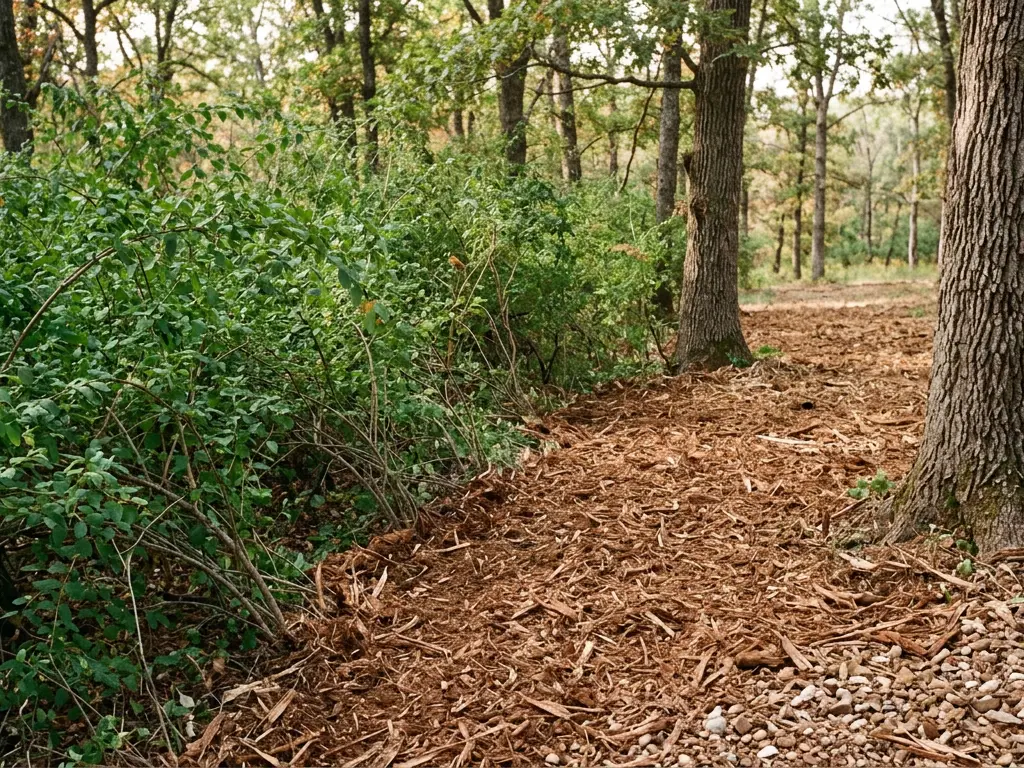
Land Clearing Springfield MO publishes this guide for property owners around Springfield planning when to clear. Land clearing can be done in any month, but the season changes the cost, the result and sometimes the rules. Around Springfield the biggest factors are wet soils in late winter and spring, the window when invasive plants are easiest to see, burning conditions, wildlife timing on larger trees, and when the ground can be reseeded.
Late summer and fall, the best all-round season
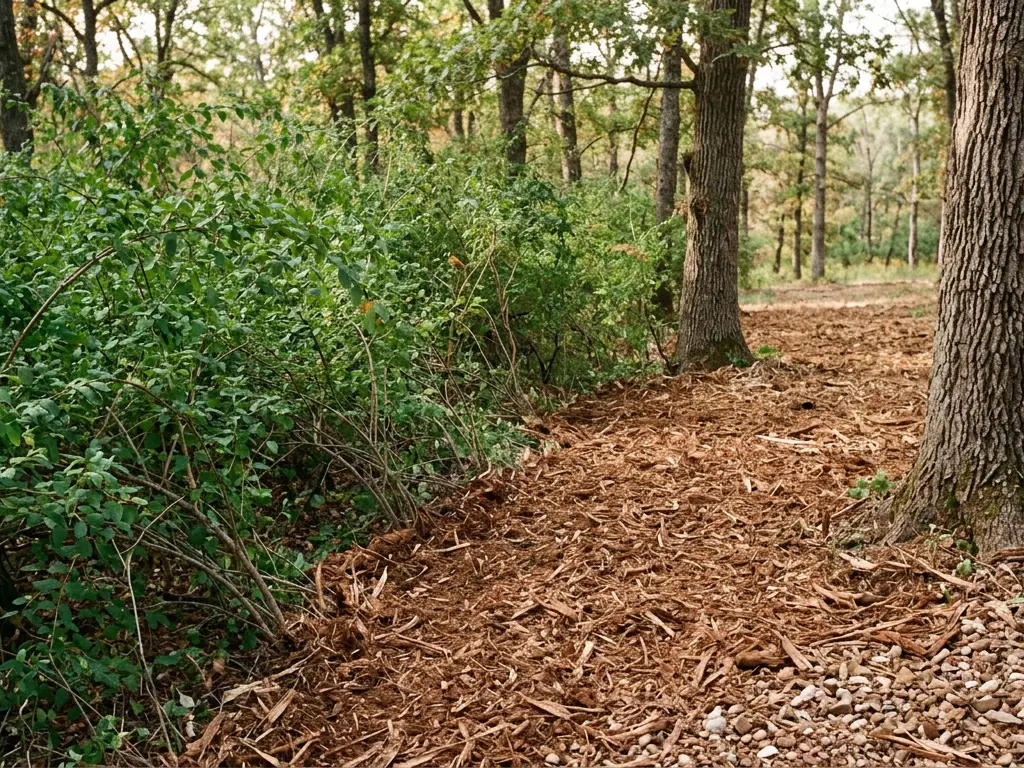
From August into November the ground is usually at its driest, so machines float rather than rut, and grubbed pads stay firm. Brush is in full leaf through September, which makes density easy to judge for quotes, and by late October the leaves are dropping and the operator can see what is being cut. Fall is also the best time to overseed fescue into mulched pasture, so clearing in early fall lets you seed the same season.
Winter, the second-best season
Dormant season is good for mulching woods and fence rows: the leaves are down, visibility is excellent, and on frozen or dry ground the machines leave little mark. Big tracts are often done in winter for that reason. The risk is a thaw: frozen ground that softens midday can rut badly.
Tell us the acreage and what is growing on it, and hear a typical price range before anyone drives out.
Call (417) 759-5914Late winter and spring, the wet season
Much of the ground around Springfield carries a fragipan, a dense layer about two feet down that holds water above it. The USDA soil survey maps one at the centers of Republic, Battlefield, Strafford, Nixa and Clever. From late winter into spring those soils are soft, heavy machines rut them, and grubbed pads hold water. Mulching on tracks can still work; grubbing and grading are best left for drier months. Better-drained ground, like the Wanda soil mapped at Willard and central Springfield, or the gravelly soils around Ozark and Sparta, firms up sooner.
Honeysuckle timing
The Missouri Department of Conservation gives early spring and late fall as the best times to work on bush honeysuckle. In late fall it stays green after native plants have dropped their leaves, so it is easy to find and target. Stump treatment on resprouts follows the next growing season. See bush honeysuckle removal for the method.
Bats and big trees
Indiana bats hibernate in Ozark caves in winter and roost under loose bark and in cracks of trees in summer. For work assisted by the Natural Resources Conservation Service, Missouri policy has restricted cutting potential roost trees, those over 9 inches in diameter with loose or peeling bark, cracks or broken tops, during the summer, with cutting allowed from fall through March. The exact window has changed over time and depends on the county, so ask the program office if federal money is involved. On private projects without federal involvement it is still a sensible reason to take big shagbark hickories and dead snags in winter.
Not sure whether you need mulching, grubbing or a full clear? Most people are not. Call and describe the ground.
Call (417) 759-5914Burning season
Burning is a weather decision as much as a seasonal one. Springfield's permit allows burning only between sunrise and sunset, with winds under 15 mph all day and a daily call to the fire department. Dry, windy spells in fall and late winter are exactly when fire districts issue burn bans. Mulching avoids the question entirely.
When the ground can be seeded
For pasture, early fall is the best time to overseed fescue, and late winter is the time to frost-seed clover into thin mulch. Clearing that finishes in late summer or early fall lines up with fall seeding; clearing that finishes in winter lines up with frost-seeding. Bare ground left over spring is the worst outcome, because spring rains are when it erodes.
Contractor calendars
The best season for the ground is also the busiest season for the people with the machines. Fall fills up early, because pasture owners want to seed and builders want pads ready before winter. Calling in mid-summer for a fall slot gets a better choice of dates than calling in October. Winter work is often easier to schedule, and some contractors are glad of it.
Weather moves every date. A wet week pushes grubbing back, and a contractor who insists on grading soft fragipan ground to keep a schedule is costing you the pad. Agree in the quote what happens if the ground is too wet on the planned day, and whether mulching can go ahead while grubbing waits.
Hunting season and access
On recreational land, fall clearing collides with deer season. Many owners want trails and food plots opened in late winter or summer so the woods are quiet by fall, and so plots can be seeded in time. On working farms, the same logic applies to calving and haying: clear the pasture when the cattle can be moved off it and the hay is already in.
A simple schedule
- August to November: grubbing, grading, home sites, pasture clearing, fall seeding
- October to November: honeysuckle, while it is the only green in the woods
- December to March: mulching woods, fence rows and big tracts on firm or frozen ground; big trees
- March to May: mulching only on tracks, frost-seeding, honeysuckle resprout treatment; avoid grubbing on wet soils
- June to July: small jobs, trails and lots; avoid cutting large trees with loose bark
Questions people ask
What is the best time of year to clear land in Missouri?
Late summer through fall for most jobs, when the ground is driest and pasture can be overseeded the same season. Winter is good for mulching woods and fence rows.
Can land be cleared in spring around Springfield?
Mulching on tracked machines can. Grubbing and grading are best avoided, because the fragipan soils common here stay wet and rut badly.
When should bush honeysuckle be removed?
Early spring and late fall, according to the Missouri Department of Conservation. In late fall it is easy to spot because it stays green.
Are there restrictions on cutting trees in summer?
On NRCS-assisted work in Missouri, cutting potential bat roost trees over 9 inches in diameter has been restricted in summer. Ask the program office for the current window.
When should I reseed after clearing?
Overseed fescue in early fall, or frost-seed clover in late winter into a thin mulch layer.
Tell us what is growing and how much of it
Say roughly how many acres, what has taken over (cedar, honeysuckle, brush, saplings, a grown-in fence row) and what you want the ground to become. You will hear which method usually fits and what it tends to cost per acre before anyone drives out.
Call (417) 759-5914