
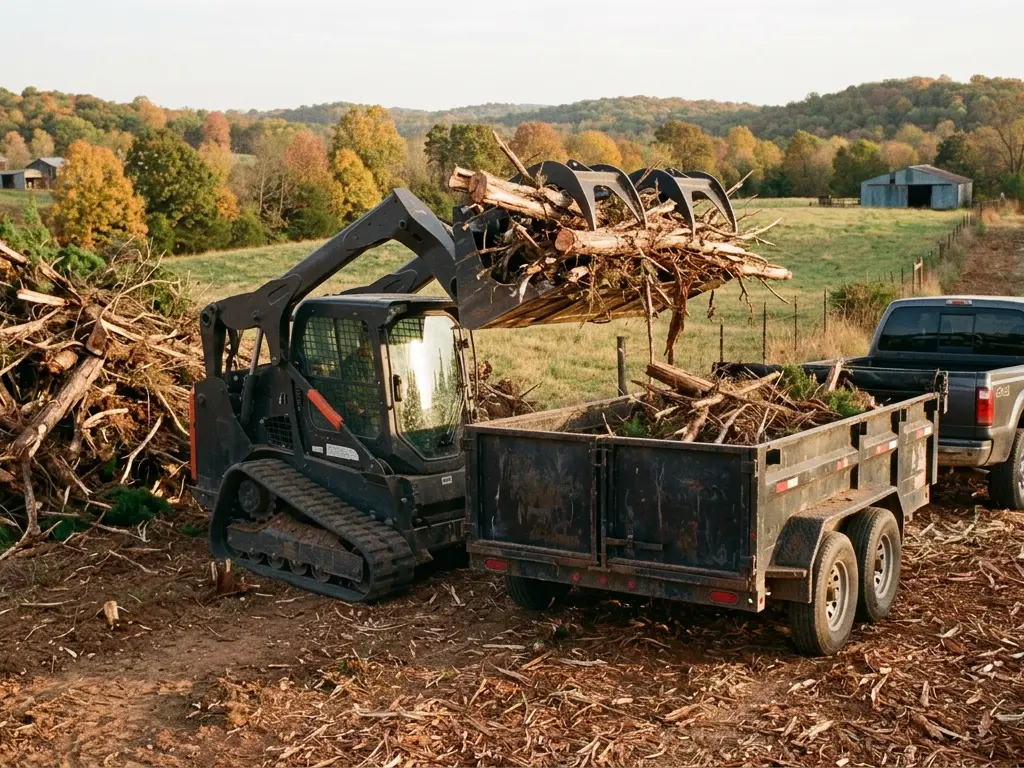
Mistakes guide
Land Clearing Springfield MO: 8 Land Clearing Mistakes That Cost Landowners Around Springfield
Most expensive clearing jobs are not expensive because of the brush. They are expensive because of one of these.
- Springfield and 10 nearby townsGreene and Christian County, all within 20 miles
- Licensed, insured local contractorsWe work with them; ask for proof before work starts
- Written price firstPer-acre ranges published on every service page
- Calls answeredMonday to Saturday, 7am to 6pm
Land Clearing Springfield MO publishes this list for property owners around Springfield before they clear. Every item on it has a cost attached, and most of them are decided before the machine arrives: which method, which areas, what happens to the debris, which permits apply and when the work is done. The cost guide has the full price ranges these mistakes push a job through.
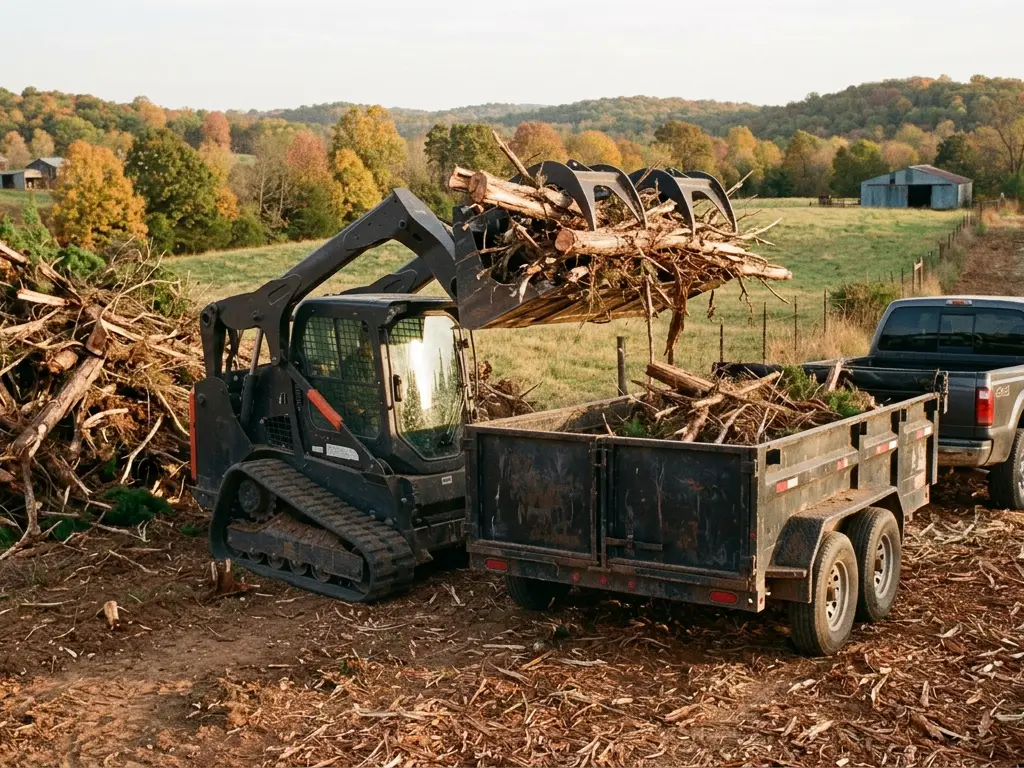
1. Waiting another year
Price follows stem size. Light clearing of brush and small trees runs $1,200 to $2,500 an acre; let it grow into dense woods and it runs $4,500 to $8,000 (HomeGuide). Cedar and honeysuckle both thicken fast on open ground. The cheapest clearing is the one done while the growth is still brush.
2. Full clearing where mulching would do
Grubbing out roots and grading costs more, needs a county permit when it is non-agricultural, and leaves bare soil to erode. If nothing will be built, forestry mulching usually does the job at $400 to $800 an acre and keeps the ground covered.
Tell us the acreage and what is growing on it, and hear a typical price range before anyone drives out.
Call (417) 759-59143. Mulching where something will be built
The opposite mistake. Roots left under a slab, footing or driveway rot and settle. If a house or drive is going where trees stand, the roots have to come out first, before the builder pours anything.
4. Starting without the permit
Greene County and Christian County both require a permit for non-agricultural land disturbance, and both use clearing trees with a dozer as their example. Over one acre the state land disturbance permit applies too, and inside Springfield the city runs that program. Starting without the right permit can stop the job. Settle who applies, in writing, before work starts.
5. Clearing to the edge of a sinkhole or creek
Greene County keeps existing ground cover in place within 25 feet of a sinkhole's flooding area during construction, and any activity in a mapped floodplain needs a floodplain development permit in both counties. Clearing right to the edge invites a violation, and on karst ground, sediment that reaches a sinkhole can reach groundwater.
Not sure whether you need mulching, grubbing or a full clear? Most people are not. Call and describe the ground.
Call (417) 759-59146. Forgetting the debris
A quote that covers clearing but not the piles is half a quote. Hauling brush runs $150 to $200 a pickup-truck load plus dump fees of $30 to $100 a ton, and a wooded lot fills a lot of loads. Burning inside Springfield needs the $84 city permit and, for commercial clearing within 200 yards of someone else's structure, an air curtain incinerator. Decide in the quote whether debris is mulched, chipped, burned or hauled.
7. Cutting honeysuckle without treating the stumps
Bush honeysuckle resprouts from the root crown. The Missouri Department of Conservation recommends treating cut stems with a 10 to 20 percent glyphosate solution and following up on resprouts. Mulching honeysuckle without that step buys two or three years before you are paying to clear it again.
8. Clearing on wet ground
Much of the ground around Springfield has a fragipan that holds water through late winter and spring, mapped at the centers of Republic, Battlefield, Strafford, Nixa and Clever. Heavy machines on wet ground leave ruts that last for years and pads that hold water. Schedule grubbing and grading for dry months.
Questions that catch these early
Most of these mistakes surface if you ask the right questions before signing. Ask the contractor which areas they will mulch and which they will grub, and why. Ask who applies for the permit and which office it comes from. Ask where the debris goes and whether hauling and dump fees are in the price. Ask whether stump treatment is included for honeysuckle and hardwood resprouts. Ask what they will do if the ground is wet on the planned day.
A contractor who answers all of those without hesitating has done this before, and usually on ground like yours. A quote that cannot answer them is a quote that will grow once the work starts.
The cheapest fixes, by mistake
- Waiting: clear while it is still brush, and then mow at least once a year afterward to keep it that way
- Wrong method: mulch everything except the footprint of what will be built
- No permit: one call to the county or city office before the machine is booked
- Sinkholes and creeks: flag them and their buffers on the ground before work starts
- Debris: put the debris plan in writing in the quote
- Honeysuckle: include stump treatment and a follow-up visit
- Wet ground: schedule grubbing for late summer and fall
The common thread
Every one of these is cheaper to avoid than to fix, and none of them needs special knowledge, only a few decisions made before the contractor is booked rather than after the machine is already on site. Walk the property, decide what each area is for, mark the trees that stay and the sinkholes and creeks to leave alone, and get the method, debris plan and permit responsibility written into the quote.
Questions people ask
What is the most expensive land clearing mistake?
Usually waiting. Light clearing runs $1,200 to $2,500 an acre and heavy clearing $4,500 to $8,000 (HomeGuide), and growth moves a job up those bands every year.
Should I clear everything to bare ground?
Only where something will be built or tilled. Elsewhere, mulching is cheaper and keeps the soil covered.
Do I need a permit to clear my land?
Non-agricultural work that disturbs the root zone needs Greene County's grading permit or Christian County's soil erosion control permit outside city limits, plus the state permit over one acre.
What should a land clearing quote include?
The method, the areas covered, debris handling, stump treatment where needed, who pulls permits, erosion control, and what is excluded.
Why did my honeysuckle come back after clearing?
It resprouts from the root crown. Cut stems need treating with herbicide, and resprouts need a follow-up treatment.
How do I avoid clearing on wet ground?
Schedule grubbing and grading for late summer and fall. The fragipan soils mapped across much of the Springfield area hold water through late winter and spring, and heavy machines rut them.
Tell us what is growing and how much of it
Say roughly how many acres, what has taken over (cedar, honeysuckle, brush, saplings, a grown-in fence row) and what you want the ground to become. You will hear which method usually fits and what it tends to cost per acre before anyone drives out.
Call (417) 759-5914