
Symptom guide
Land Clearing Springfield MO: Signs You Need Land Clearing in Springfield
Overgrowth creeps. These are the points where it stops being a mowing problem and becomes a clearing job, and why each year of waiting costs more.
- Springfield and 10 nearby townsGreene and Christian County, all within 20 miles
- Licensed, insured local contractorsWe work with them; ask for proof before work starts
- Written price firstPer-acre ranges published on every service page
- Calls answeredMonday to Saturday, 7am to 6pm
Land Clearing Springfield MO publishes this guide for property owners around Springfield who are looking at a field, a fence row or a patch of woods and wondering whether it needs clearing yet. Each sign below says what it usually means, which kind of clearing fits, and why waiting raises the price. The short answer: once stems are too thick for the mower you own, the cost per acre goes up every season you leave it.
Cedar seedlings in the grass
Small eastern red cedar scattered through a pasture is the first sign of a field turning to woods. Birds plant them along every fence, and on open ground without fire or mowing almost every seedling survives. At knee height they are mulching work, the cheapest clearing there is. Once they close into a stand, the grass underneath is gone and it is moderate clearing. Cedar tree removal explains why cedar, unusually, does not resprout from a cut stump.
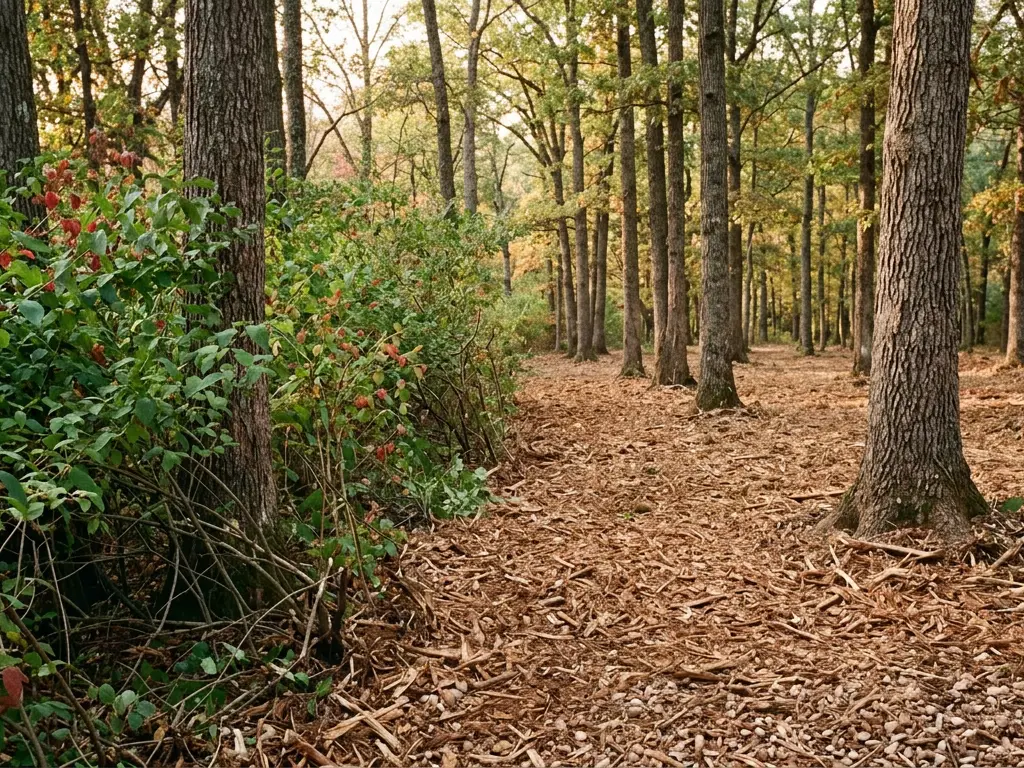
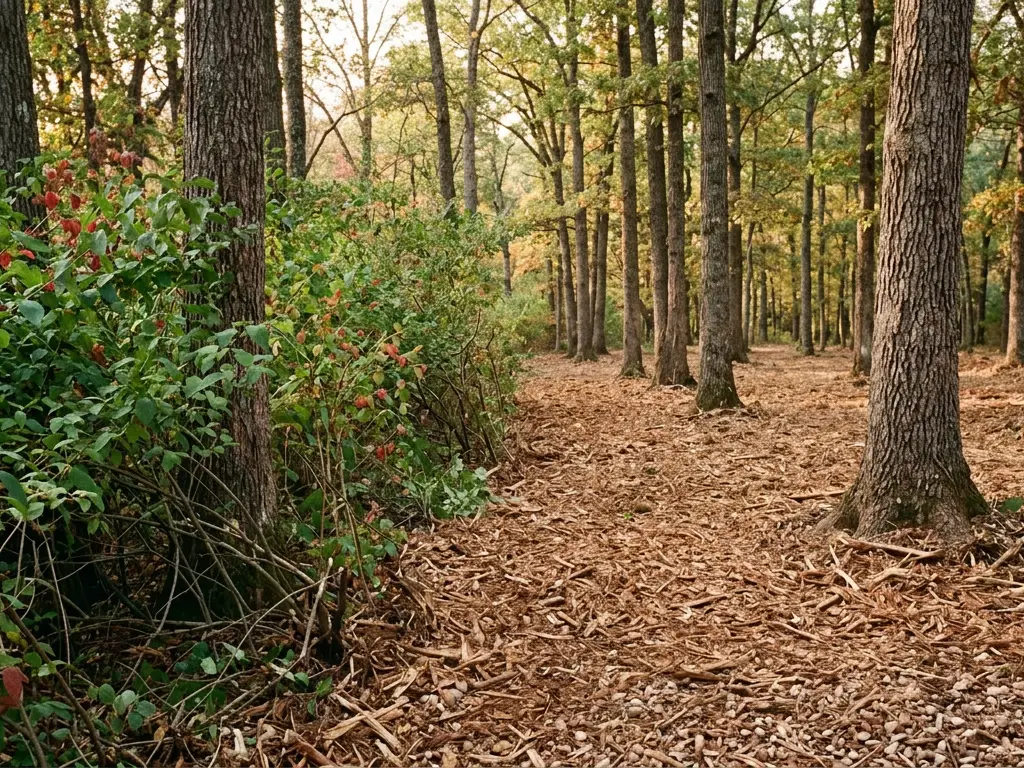
A green wall under the oaks in November
If your woods still have a green understory after the oaks have dropped their leaves, it is almost certainly bush honeysuckle. The Missouri Department of Conservation names Amur and Morrow's honeysuckle as the state's main invasive honeysuckles. They shade out native plants and tree seedlings, so woods full of them have no young oaks coming up. The longer they stand, the thicker the stems and the more resprouts after cutting.
Tell us the acreage and what is growing on it, and hear a typical price range before anyone drives out.
Call (417) 759-5914A fence you cannot walk
When you can no longer walk or drive along a fence, trees are usually growing into the wire and pushing posts over. Fence rows grow in faster than fields because mowers cannot reach under the wire and birds drop seed along it. Clearing a strip either side while the trees are small saves the fence; waiting until they are grown into it means hand cutting every tree out of the wire.
The bush hog is losing
A rotary cutter that stalls, breaks shear pins, or rides over saplings that spring back up is telling you the growth has outrun it. That is the point where a forestry mulcher becomes the right tool. Past it, every season adds stem diameter, and the price follows stem diameter.
Ticks, chiggers and nowhere to walk
Brush and tall grass hold ticks and chiggers. If walking your own land means a check afterward, and you cannot see more than a few yards into it, it is no longer usable ground. Opening it with mulching and keeping it mowed changes that quickly.
Not sure whether you need mulching, grubbing or a full clear? Most people are not. Call and describe the ground.
Call (417) 759-5914A field that carries fewer cattle
Pasture losing grazing days each year, cattle walking around brush patches, and hay yields dropping are slow signs, easy to put off. They are also the ones with a direct cost: every acre lost to brush is grass you are not using. Pasture reclamation while it is still brush keeps the existing grass roots alive under the mulch.
Storm debris and stumps
Downed trees and stumps left from a storm sprout, rot and hide hazards in the grass. In residential areas like Battlefield and south Springfield, a yard of storm stumps left two seasons becomes a thicket. Grinding them is cheap; clearing the thicket that grows from them is not.
You want to build, sell or use it
Sometimes the sign is a plan: a house site, a sale, a trail, a food plot. Clearing for a purpose is cheaper than clearing everything, so decide what the ground is for first. If something will be built, the roots have to come out and a county permit probably applies. If not, mulching alone is usually enough.
Signs by season
Some signs are easiest to see at particular times of year. In late fall, honeysuckle stands out as the only green under bare oaks, and cedar shows as dark spots across tan pasture. In winter, with the leaves down, you can see how far brush has crept into a field and which fence rows have closed. In spring, wet low spots show where the ground holds water, which matters if you plan to grub. In summer, density is at its worst and a walk through tells you how much of the ground is usable.
Signs it can still wait
Not everything needs a machine. Scattered seedlings in a field you mow every year, a fence row you can still walk, and woods you can see into are maintenance, not clearing. A bush hog pass once a year and pulling cedar seedlings by hand while they are small keeps ground open for very little. The point to call is when the mower stops winning.
What to do next
Walk the ground, take photos, and estimate the acreage and the size of the biggest stems. That is enough to get a useful price range on the phone. The cost guide shows where each kind of job usually falls.
Questions people ask
What are the signs my land needs clearing?
Cedar spreading into grass, honeysuckle green under the oaks in late fall, fence rows you cannot walk, saplings that beat your mower, and fields losing grazing days. Each gets more expensive the longer it stands.
When is brush too big to mow?
When a bush hog stalls, breaks shear pins or rides over saplings that spring back. At that point a forestry mulcher is the right tool.
How do I know if it is bush honeysuckle?
It stays green after native trees drop their leaves, has paired oval leaves and paired red berries in fall, and the stems have hollow tan pith.
Does waiting really make clearing more expensive?
Yes. Price follows stem size and density. Light clearing runs $1,200 to $2,500 an acre and heavy clearing $4,500 to $8,000 (HomeGuide).
Should I clear everything at once?
Not necessarily. Decide what the ground is for and clear for that purpose. Mulch where nothing will be built, and grub only where something will.
When can overgrowth safely wait?
When you still mow the field every year, can walk the fence row and can see into the woods. Pulling small cedar seedlings by hand keeps it that way.
Tell us what is growing and how much of it
Say roughly how many acres, what has taken over (cedar, honeysuckle, brush, saplings, a grown-in fence row) and what you want the ground to become. You will hear which method usually fits and what it tends to cost per acre before anyone drives out.
Call (417) 759-5914