
Process guide
Land Clearing Springfield MO: What to Expect From a Land Clearing Estimate in Springfield
A walk around the property, a few questions, and a written scope. Here is what a good estimate visit covers and what to have ready.
- Springfield and 10 nearby townsGreene and Christian County, all within 20 miles
- Licensed, insured local contractorsWe work with them; ask for proof before work starts
- Written price firstPer-acre ranges published on every service page
- Calls answeredMonday to Saturday, 7am to 6pm
Land Clearing Springfield MO publishes this guide for property owners around Springfield who have called about clearing and have a contractor coming to look. An estimate visit is short, but what happens in it decides what the quote covers. Knowing what the contractor is looking for, and having a few things ready, gets you a quote you can compare and a job that matches what you wanted.
Before the visit
- Walk the property and decide what each area is for, such as pasture, open woods, a house site or a trail
- Tie ribbon on the trees you want kept, and note any that must come down
- Find the corners, or know that you need a survey; one runs $500 to $1,500
- Mark sinkholes, wet spots, creeks, wells, septic tanks and buried lines you know of
- Pull up an aerial photo from the county's online map and sketch the areas on it
- Know whether the land is inside a city's limits
What the contractor looks at
Density and stem size, because they decide machine hours per acre. Species: cedar mulches cleanly and does not resprout; hardwoods and honeysuckle do. Slope and rock: chert-heavy ground around Ozark and Sparta wears teeth and slows grubbing. Access: where a trailer can unload and whether gates and fences allow the machine in. Water: creeks, wet ground and sinkholes that need buffers or a floodplain permit. Debris: how much there will be and where it can go.
Tell us the acreage and what is growing on it, and hear a typical price range before anyone drives out.
Call (417) 759-5914Questions you will be asked
- What do you want the ground to become?
- Is anything being built, and where?
- Which trees stay?
- Should debris be mulched, burned, chipped or hauled?
- Is the land in a city, or in the county?
- When do you need it finished?
Questions to ask back
- Which machine will you use, and how many acres a day do you expect here?
- Will you mulch or grub each area, and why?
- Who applies for the county or city permit, if one applies?
- Who installs and maintains silt fence?
- What happens to stumps, logs and debris, and is hauling in the price?
- Is stump treatment included where things will resprout?
- Can you show proof of insurance?
What a good written quote says
A good quote is specific enough that two people reading it would picture the same finished job. It describes the scope by area: so many acres mulched, so much fence line cleared, a pad of a stated size grubbed and rough graded. It names the method for each area, the debris plan, who handles permits and erosion control, any mobilization fee or minimum charge, and what is excluded, such as rock excavation or hauling large logs. A single number with no scope is hard to compare and easy to argue about later.
Prices should land somewhere in the typical ranges: forestry mulching averages $400 to $800 an acre and land clearing $1,200 to $8,000 an acre depending on density (HomeGuide). The cost guide lists the rest.
Not sure whether you need mulching, grubbing or a full clear? Most people are not. Call and describe the ground.
Call (417) 759-5914Comparing two quotes
Two quotes for the same property can look far apart because they describe different jobs. One may mulch the whole tract while the other grubs part of it; one may include hauling while the other leaves the piles. Lay them side by side by area and method before comparing totals. If one contractor is pricing work the other left out, ask the second to price it too.
Watch for the things that move after the job starts: rock excavation, extra loads of debris, extra machine days if density was underestimated, and permit delays. A quote that states how those are handled, such as a day rate for extra time, protects both sides. Ask for references from recent jobs on similar ground, and look at one if you can.
How long it takes to get the quote
For a lot or small acreage, a written quote usually follows within a few days of the visit. Big tracts and commercial sites take longer, because the contractor may need plans, a survey or the stormwater plan before pricing. Sending the aerial sketch and photos ahead of the visit shortens both the visit and the wait, and it often means the first number you hear is close to the final one.
On the day work starts
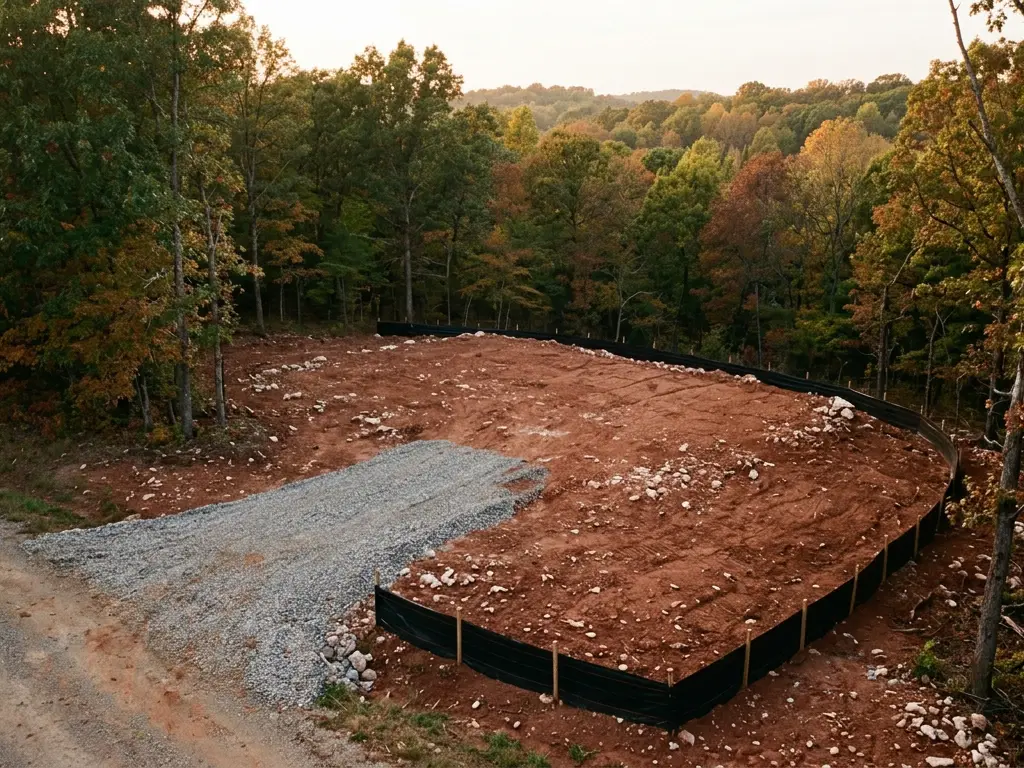
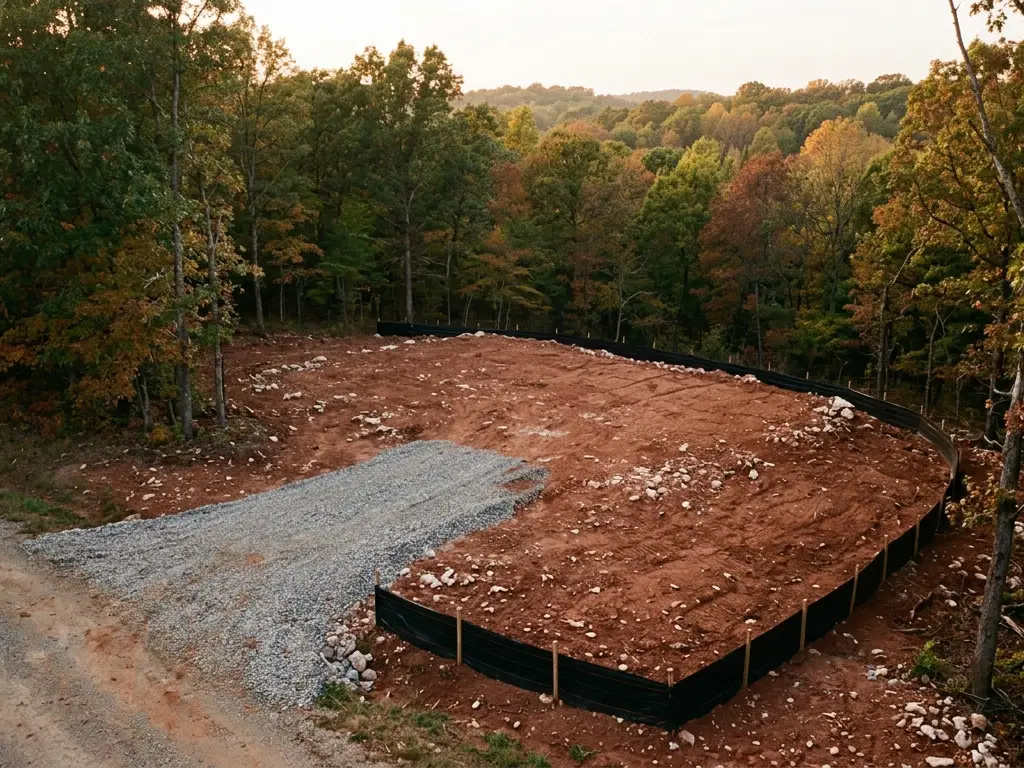
Expect the machine to arrive on a trailer, erosion control to go in first on any area being grubbed, and the operator to walk the boundaries and the kept trees with you before cutting. A skid steer mulcher typically covers 1 to 3 acres a day. Keep people and animals well back from a running mulcher, because it throws debris.
After the work
Walk the job with the contractor before paying the balance. Check that kept trees are undamaged, buffers were left, debris was handled as agreed and silt fence is in place where needed. Then plan the follow-up: seeding, mowing, and treatment of resprouts. For a mulched job, forestry mulching covers what to do in the first seasons.
Questions people ask
How long does a land clearing estimate take?
Usually well under an hour on site for a lot or small acreage, longer for big tracts. Photos and an aerial sketch in advance shorten it.
What should I do before a contractor comes out?
Decide what each area is for, mark trees to keep, find corners, note sinkholes, wet spots and buried lines, and know whether the land is inside a city.
What should a land clearing quote include?
Scope by area, the method for each, debris handling, permits and erosion control, mobilization or minimum charges, and exclusions.
Should I be there when work starts?
Yes, ideally. Walk the boundaries and the trees that stay with the operator before cutting begins.
What happens after the clearing is done?
Walk the finished job, then plan follow-up: seeding, mowing and treating resprouts from hardwoods or honeysuckle.
How do I compare two land clearing quotes?
Line them up by area and method before comparing totals, check whether each includes debris handling, permits and erosion control, and ask how extra machine days or rock are charged.
Tell us what is growing and how much of it
Say roughly how many acres, what has taken over (cedar, honeysuckle, brush, saplings, a grown-in fence row) and what you want the ground to become. You will hear which method usually fits and what it tends to cost per acre before anyone drives out.
Call (417) 759-5914