
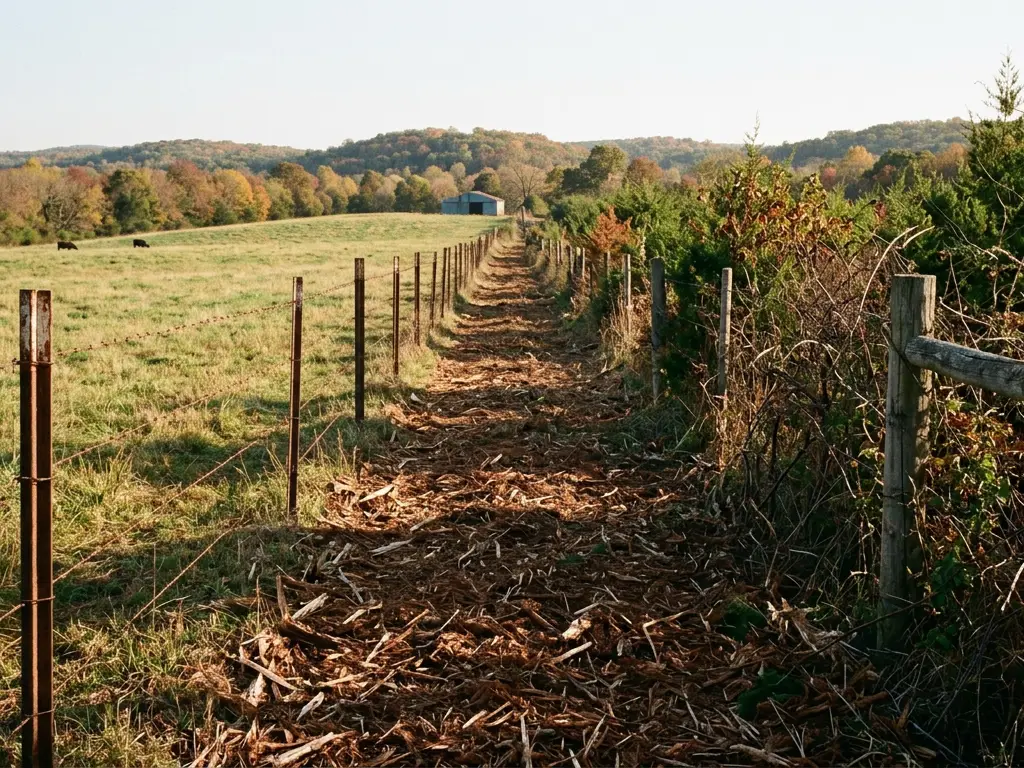
Grass back on the ground
Land Clearing Springfield MO: Pasture Reclamation Near Springfield
A hay field or pasture lost to brush can be grazed again within a season, if the clearing is followed by seed and a mower.
- Springfield and 10 nearby townsGreene and Christian County, all within 20 miles
- Licensed, insured local contractorsWe work with them; ask for proof before work starts
- Written price firstPer-acre ranges published on every service page
- Calls answeredMonday to Saturday, 7am to 6pm
Land Clearing Springfield MO arranges pasture reclamation for cattle and hay ground around Springfield, where fields left ungrazed or unmowed for a few years go to broomsedge, blackberry, sumac, cedar and hardwood saplings. The work clears the woody growth, keeps the soil in place, and leaves a surface that can be overseeded and mowed, so the field goes back to grass instead of back to brush.
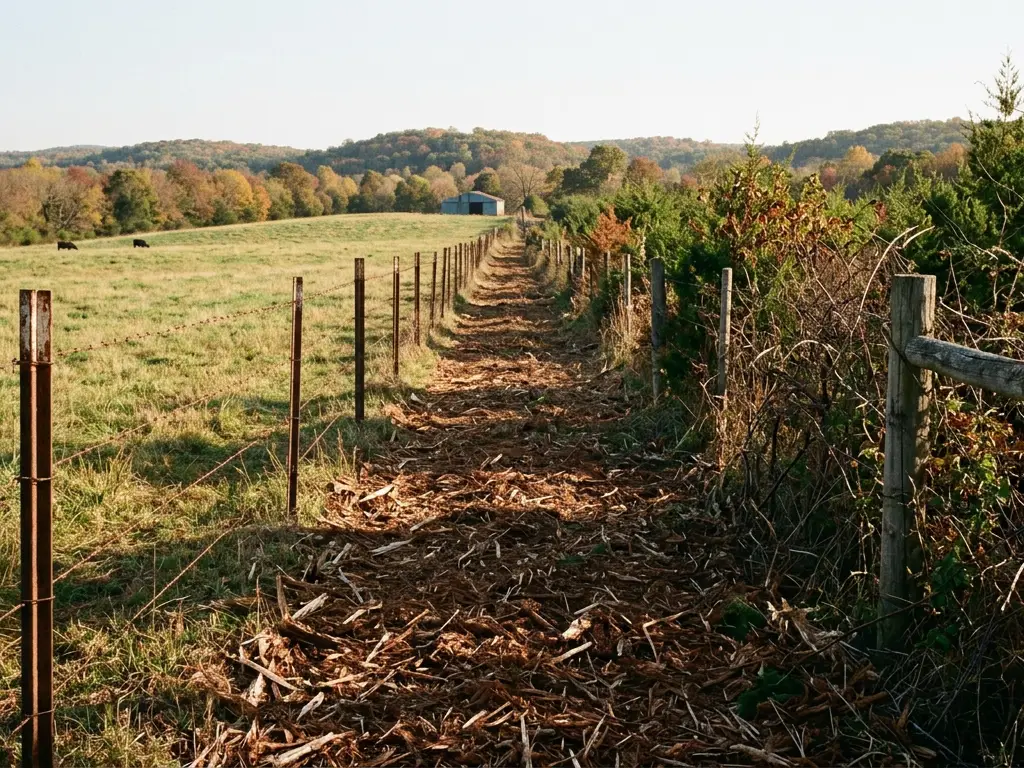
Reclaiming a pasture while it is brush and saplings runs $1,200 to $2,500 an acre at light-clearing rates; once the saplings are trees it is moderate clearing at $2,500 to $4,500, and the grass seed bank underneath is mostly gone.
Typical price
$1,200 to $4,500 an acre
Pasture reclamation usually falls between light clearing at $1,200 to $2,500 an acre and moderate clearing at $2,500 to $4,500 (HomeGuide, November 2025). Where the growth is mostly brush and small cedar, forestry mulching alone at $400 to $800 an acre can be enough. Seed and fertilizer are extra.
Get a price: (417) 759-5914A pasture that is going back to woods
- Fewer grazing days from the same field each year
- Cattle trailing around patches of brush instead of through them
- Blackberry and sumac spreading from the corners
- Cedar seedlings in what used to be clean grass
- Hay yields falling off and weeds in the bales
- Fence lines you can no longer drive along
Clearing for grass, not bare ground
The aim on pasture is to remove the woody stems while disturbing the soil as little as possible. A forestry mulcher does that: it grinds brush and small trees in place and leaves a thin mulch over living grass roots. Grubbing out roots or root raking the whole field turns pasture into a seedbed that has to be worked and reseeded from scratch, which is slower and costs more.
Clearing farm ground for grazing is the kind of agricultural activity the county grading permits are not aimed at, since both Greene and Christian County require permits for non-agricultural land disturbance. Work in a mapped floodplain is different: both counties require a floodplain development permit there.
Seeding into the mulch
Most pastures around Springfield are tall fescue, often with clover. After mulching, early fall is the best window to overseed fescue, and frost-seeding clover in late winter into the thin mulch works well. Thick mulch piles over stumps will stay bare for a while; scatter them or seed around them.
The soil matters to what comes back. Around Clever, Nixa and Republic, the USDA soil survey maps silt loams over a fragipan, a dense layer about two feet down that perches water in wet seasons. Those fields grow good grass but stay soft into spring, which is another reason to clear them in fall or a dry winter.
Tell us the acreage and what is growing on it, and hear a typical price range before anyone drives out.
Call (417) 759-5914Keeping the field open afterward
The cheapest way to keep a reclaimed pasture is grazing pressure plus one clipping a year. Brush that resprouts from roots, like sumac and blackberry, needs a mower pass or a spot herbicide in the first two seasons. Cedar will not resprout, but seedlings will keep arriving from the fence rows, so clear those at the same time.
Questions people ask
How much does it cost to reclaim an overgrown pasture?
Most pasture reclamation falls between $1,200 and $4,500 an acre, from light brush to moderate trees (HomeGuide). Brush-only fields can be mulched for $400 to $800 an acre.
What are the signs my pasture needs clearing?
Fewer grazing days, cattle walking around brush patches, blackberry and sumac spreading from the corners, cedar seedlings in the grass, and falling hay yields.
Should I mulch or bulldoze an overgrown pasture?
Mulching keeps the soil and existing grass roots in place, so the field comes back faster. Bulldozing and root raking leave bare ground that has to be reseeded and usually costs more.
When should I reseed after clearing?
Early fall is the best window to overseed fescue. Clover can be frost-seeded in late winter into a thin mulch layer.
Do I need a permit to clear my pasture?
Greene and Christian County grading permits cover non-agricultural land disturbance, so clearing for grazing is usually outside them. Any soil disturbance in a mapped floodplain still needs a floodplain development permit.
Often done together
- Cedar tree removalCedar is the tree that takes Ozarks pasture back. It does not resprout from a stump, which makes it the most satisfying thing to clear.
- Fence line clearingA fence row grows in faster than the field beside it. Clearing a strip either side of the wire gets the fence back.
- Brush clearingThick brush is the cheapest kind of overgrowth to clear, as long as it is cleared before it turns into trees.
- Land Clearing Springfield MO: Land Clearing in CleverFarm country southwest of Springfield, where pasture and small acreage are giving way to brush and new home sites.
Tell us what is growing and how much of it
Say roughly how many acres, what has taken over (cedar, honeysuckle, brush, saplings, a grown-in fence row) and what you want the ground to become. You will hear which method usually fits and what it tends to cost per acre before anyone drives out.
Call (417) 759-5914